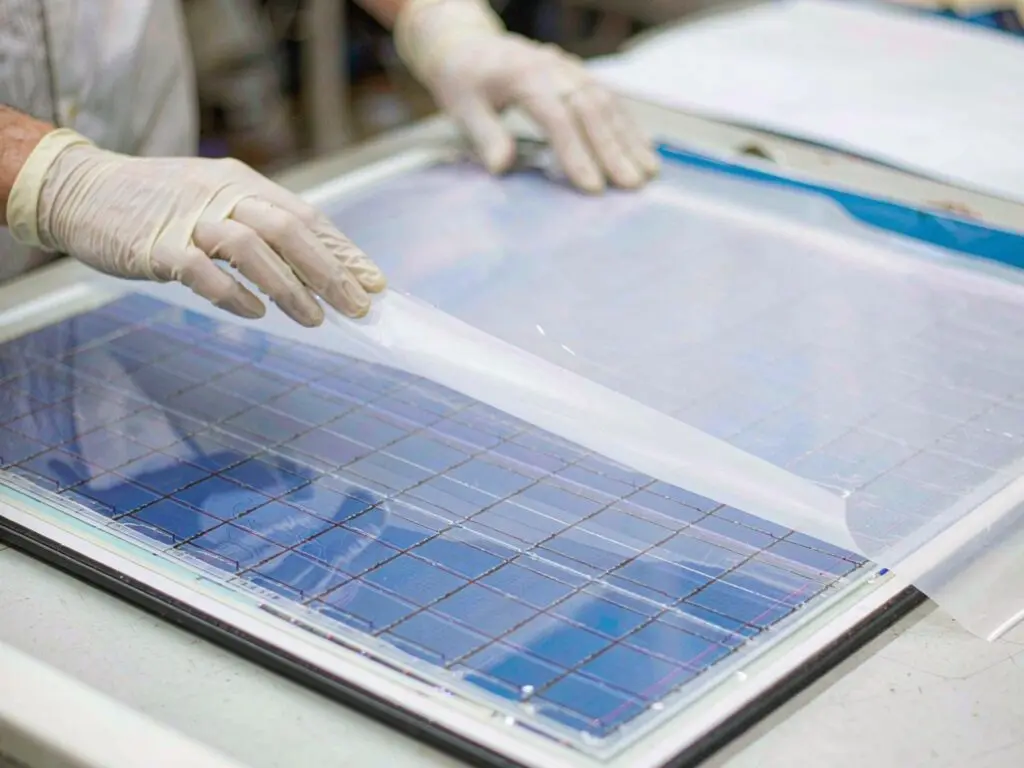
Technician laying translucent EVA encapsulant film over polycrystalline solar cells before module lamination

Photovoltaic Encapsulation Application

EVA encapsulant film is the invisible layer that holds every solar module together. It bonds glass, cells and backsheet into one laminate, seals out moisture, and keeps the module delivering power for more than 25 years in the field.

The sections below explain what the film does, how the lamination process works, and which performance numbers matter when you choose a supplier.
What the Encapsulant Does

Inside a module, the encapsulant has four jobs at once:

  • Optical coupling — its refractive index matches glass and cells, so light reaches the cells instead of bouncing away.
  • Mechanical bonding — after crosslinking it holds glass, cell string and backsheet together against wind, snow and handling.
  • Environmental sealing — it blocks moisture and oxygen that would corrode ribbons and cells.
  • Electrical isolation — high volume resistivity prevents leakage currents between cells and frame.

If any one of these fails, module power degrades and warranty claims follow — which is why encapsulant quality is controlled far more strictly than ordinary packaging film.

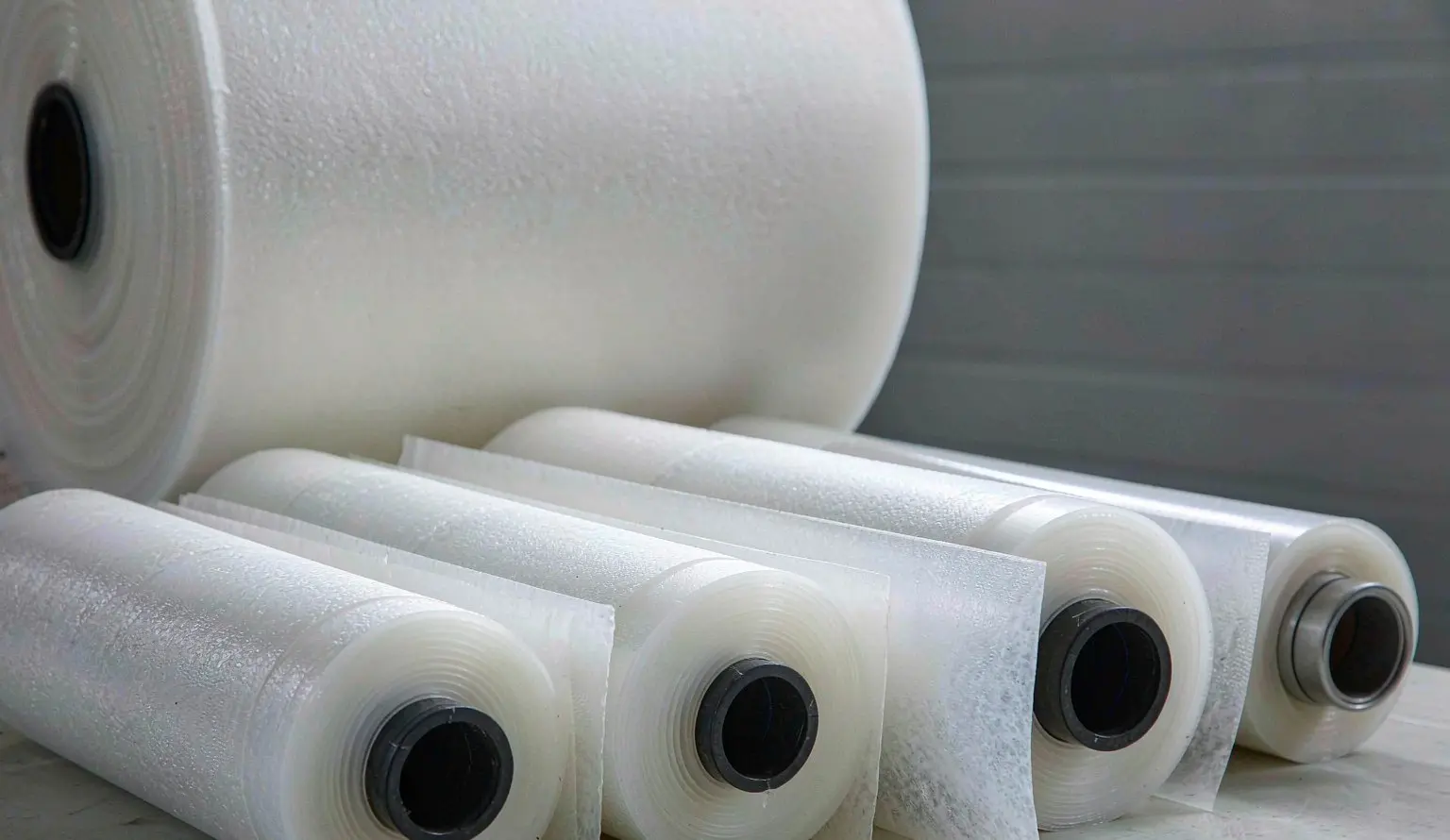
Embossed translucent milky white EVA photovoltaic encapsulant film roll for solar module lamination

From Lay-up to Lamination

Three steps turn rolls of film into a finished, weather-proof module.

1 · Lay-up

Cut film sheets slightly larger than the glass. Stack: glass / EVA / cell string / EVA / backsheet. Film softens gently below 80 °C, so it holds the stack in place without stressing the cells.

2 · Lamination

In the laminator the stack is evacuated (below −0.08 MPa) and heated to 140–150 °C for 12–18 minutes. The EVA melts, wets every surface, and crosslinks into a permanent elastic bond.

3 · Crosslink & Trim

Gel content reaches at least 75%. After cooling, edges are trimmed and the laminate moves on to framing and junction-box mounting. Cure level is verified by gel-content testing on every batch.
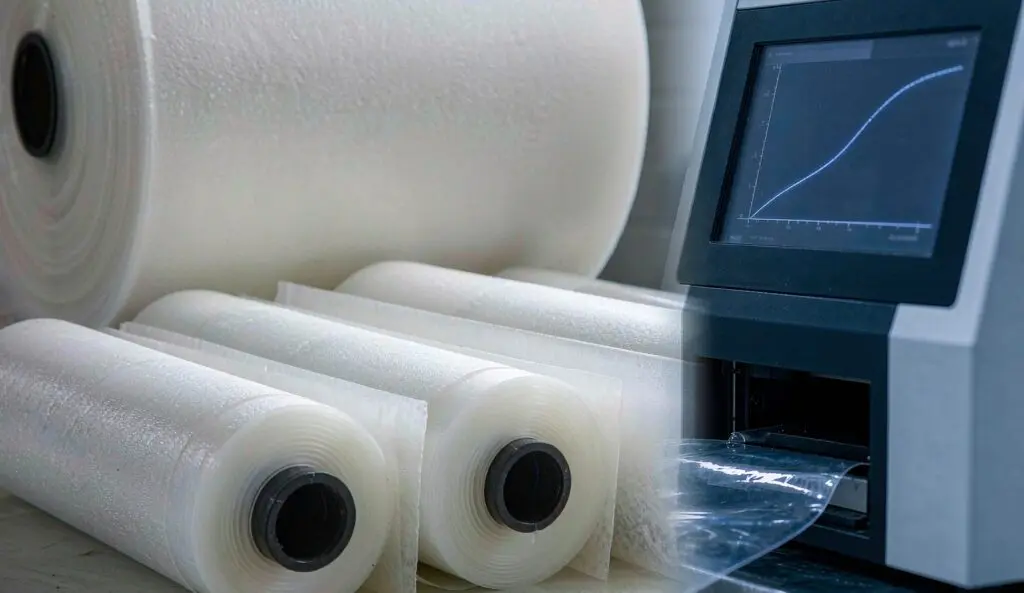
EVA encapsulant film rolls and UV-Vis transmittance test curve

What PV-Grade Really Means

Encapsulation film is not commodity EVA packaging film. PV-grade material is tested to GB/T 29848-2018 and IEC standards, and United UF-3300 is controlled on every batch for:

  • Transmittance ≥ 91% across 380–1100 nm (UV-cut grade: ≤ 30% at 280–380 nm)
  • Crosslinking (gel content) ≥ 75% after lamination
  • Peel strength > 60 N/cm on glass, > 40 N/cm on backsheet, > 30 N/cm after damp-heat ageing
  • Shrinkage MD ≤ 3.0% / TD ≤ 1.5% after 2 h at 120 °C
  • Volume resistivity ≥ 1 × 10¹⁴ Ω·cm and low water-vapour transmission

Our PV-Grade Materials

United Industry supplies encapsulant film with full batch traceability, datasheets and third-party test reports.

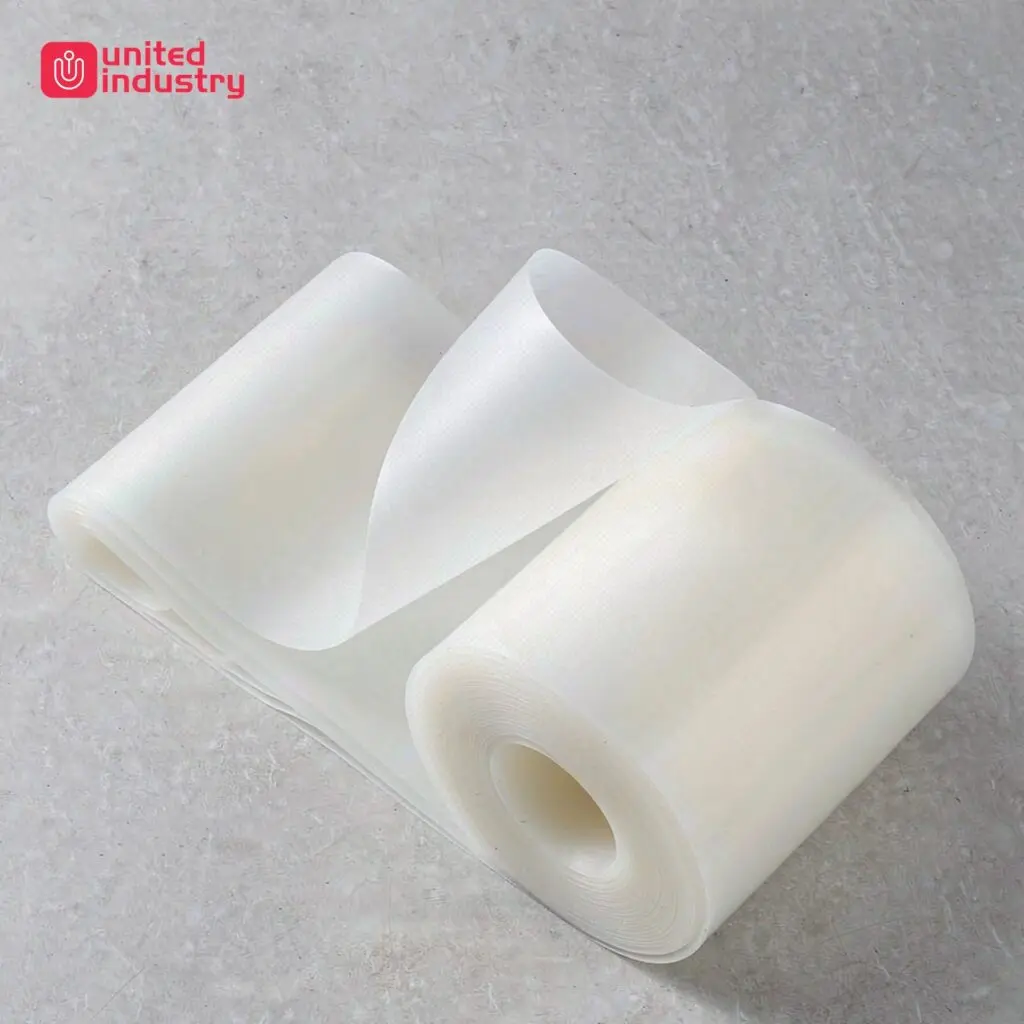
Embossed translucent milky white EVA photovoltaic encapsulant film roll for solar module lamination

EVA Encapsulation Film UF-3300

Clear PV-grade EVA film: ≥ 91% transmittance, ≥ 75% crosslinking, > 60 N/cm glass peel strength. 0.2–0.8 mm, width up to 1600 mm.
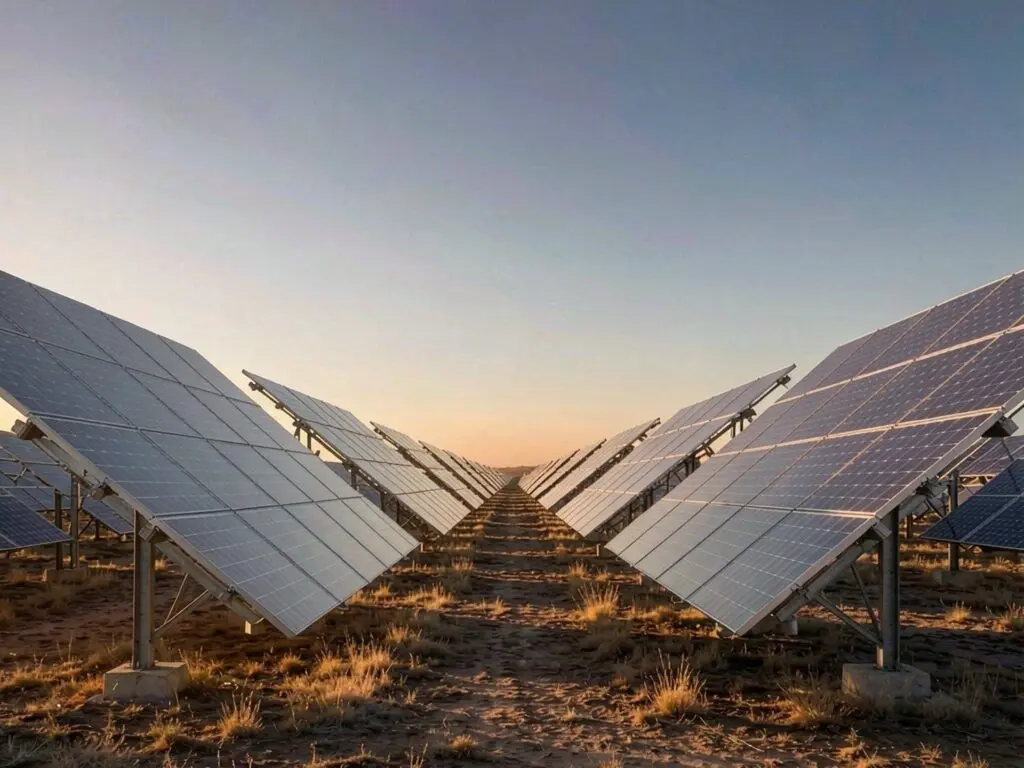
Large photovoltaic power plant with rows of monocrystalline solar panels at golden hour

UV-Cut Grade

A UV-blocking version transmitting ≤ 30% at 280–380 nm to protect cells and backsheet from UV-driven degradation, ideal for high-irradiance sites and double-glass modules.

Custom Width & Roll Length

Slit widths up to 1600 mm and rolls wound at 100–400 m to match your laminator bed and loading routine. Tell us your line specification.

Contact us for More Details

Reach out to our team for samples, datasheets and lamination trial support for your module line.