EVA Photovoltaic Encapsulation Film UF-3300
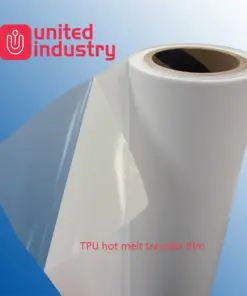
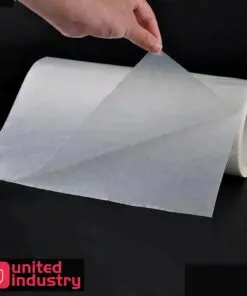
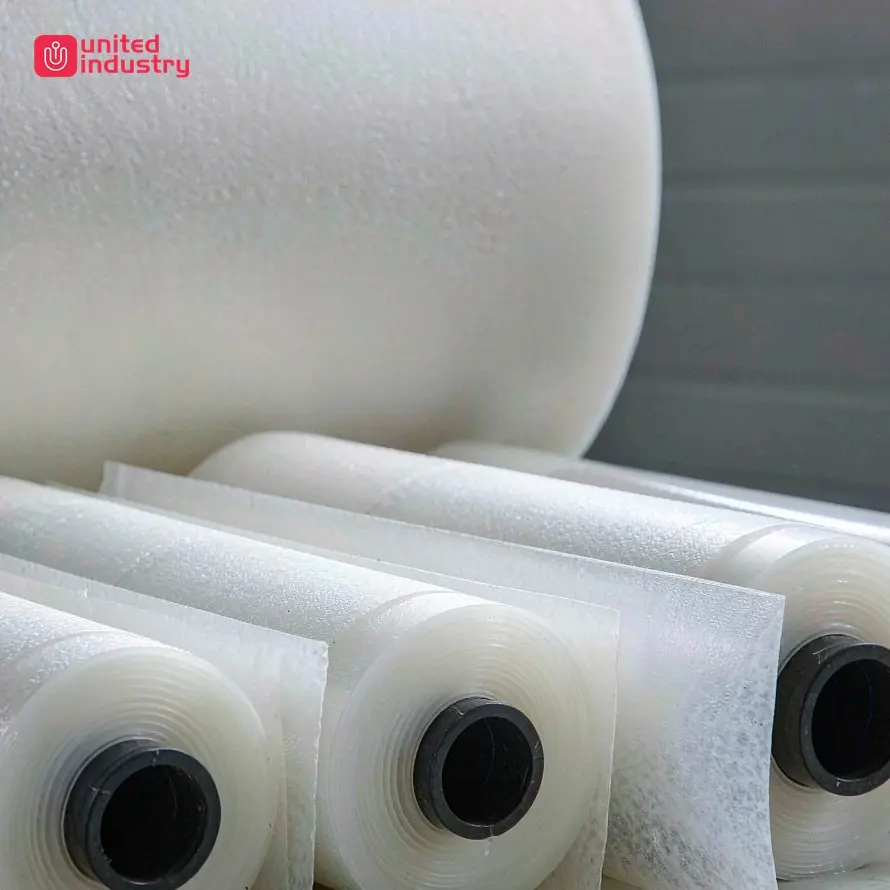
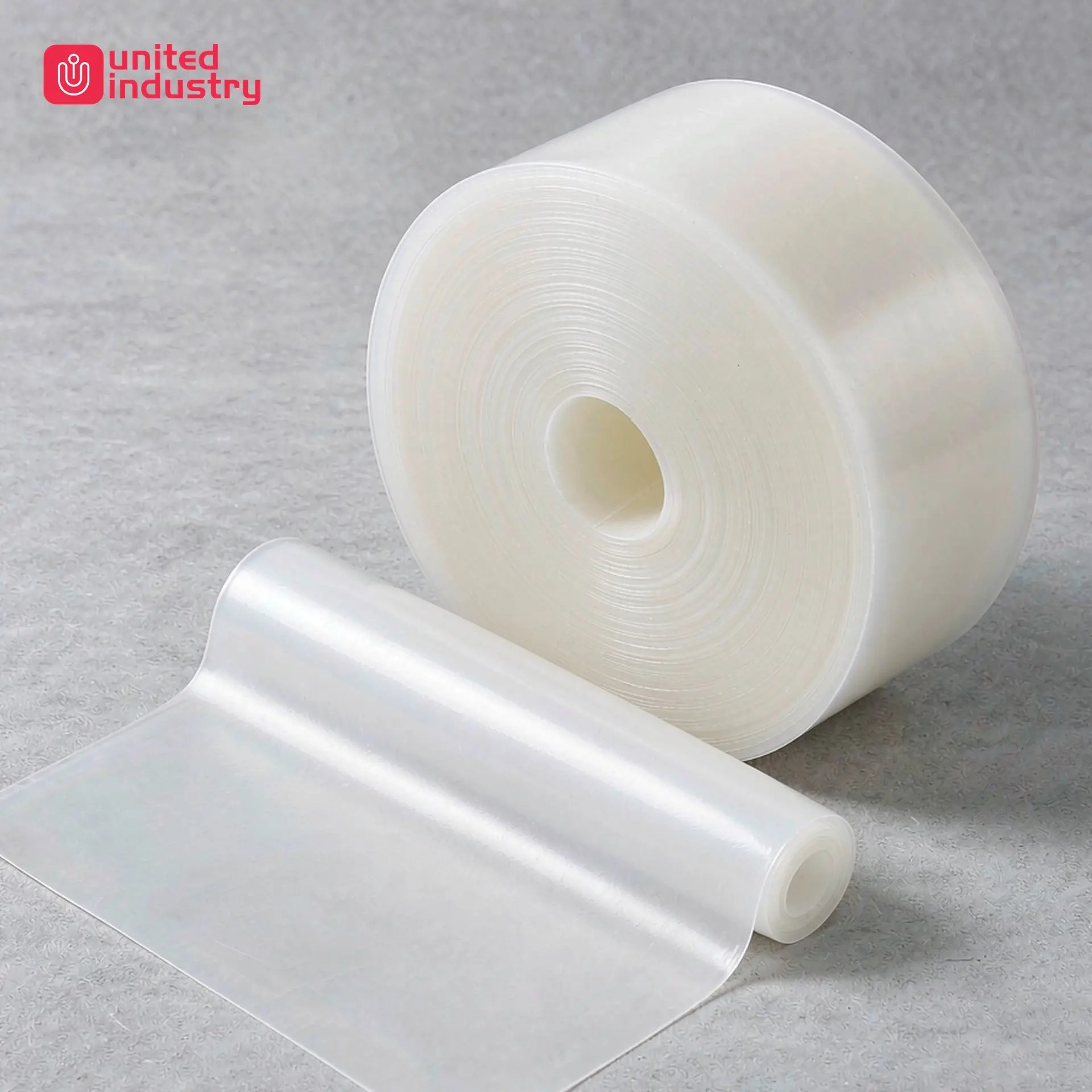
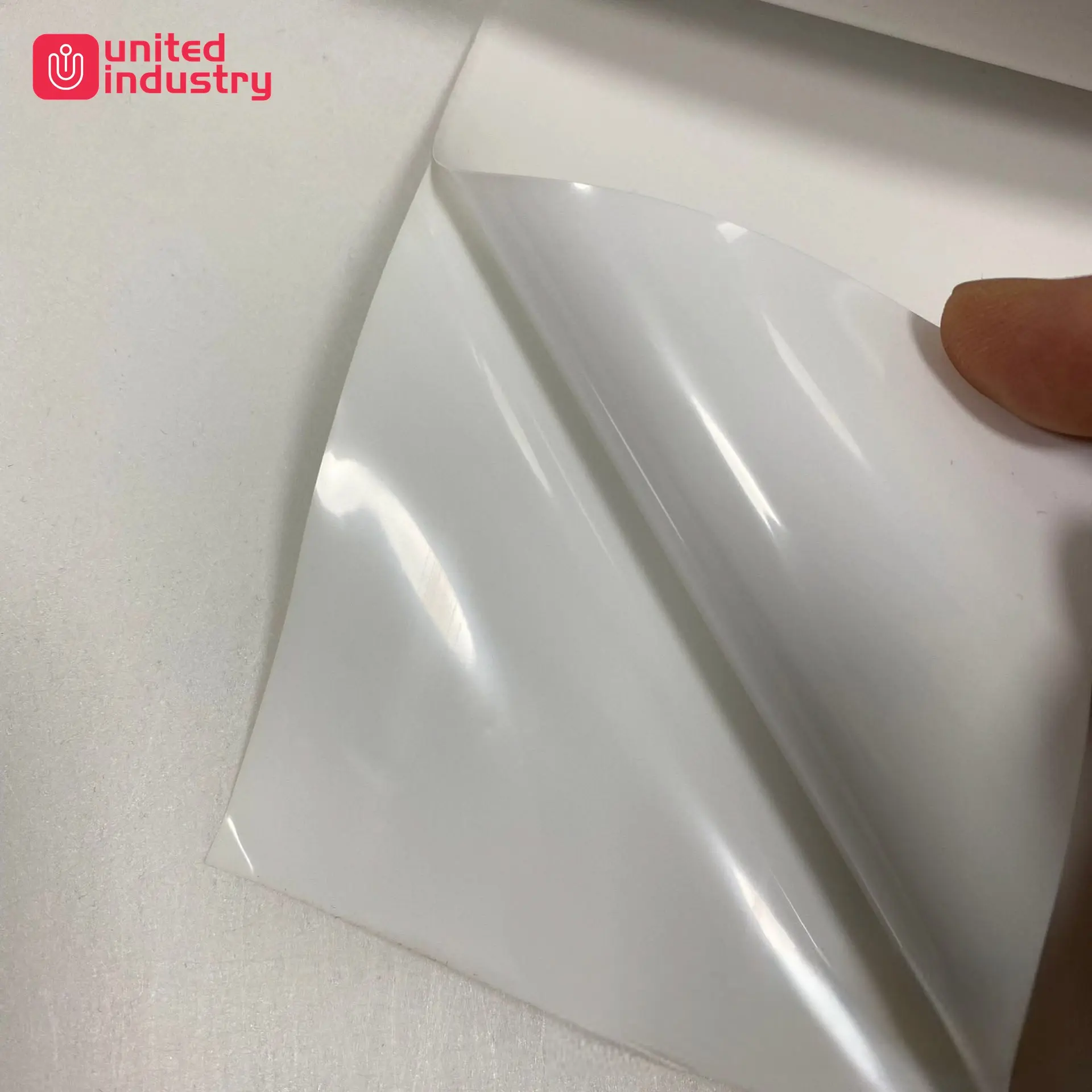
UF-3300 is a transparent ethylene-vinyl acetate (EVA) encapsulant film engineered for solar module lamination. Supplied as smooth, tack-free rolls, it melts and crosslinks during vacuum lamination at 140–150 °C, bonding the glass, cells and backsheet into a single weatherproof laminate — supporting and fixing the cells, raising light transmission, and isolating moisture and other environmental attack for the 25-year service life of the module.
The film is formulated to the requirements of GB/T 29848-2018 for PV module encapsulation. After curing it delivers ≥91% light transmittance across the 380–1100 nm working band, a crosslinking degree of ≥75% for long-term thermal stability, and peel strength above 60 N/cm to glass that stays above 30 N/cm after damp-heat, thermal-cycle and UV ageing. A UV-cutting grade is available for modules that need added protection of the encapsulant and backsheet against 280–380 nm radiation.
Key Features
- High light transmittance — ≥91% transmittance (380–1100 nm, after curing) maximises module conversion efficiency; UV-cut grade ≤30% at 280–380 nm on request
- Strong, durable adhesion — peel strength >60 N/cm to glass and >40 N/cm to backsheet, remaining >30 N/cm after DH1000 and UV ageing
- Reliable crosslinking — gel content ≥75% after standard lamination keeps the encapsulant stable through decades of thermal cycling
- Excellent weathering resistance — yellowing index ΔYI <5 after UV and damp-heat ageing; no delamination, bubbles or discolouration
- Low shrinkage, easy handling — MD ≤3.0% / TD ≤1.5% (120 °C, 3 min, before curing) for precise string layout and clean trimming
- Solid electrical insulation — volume resistivity ≥1.0 × 10¹⁵ Ω·cm and dielectric strength ≥25 kV/mm protect module performance under high humidity
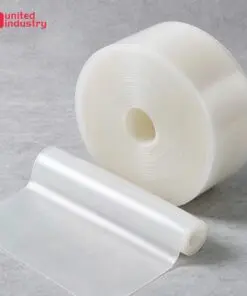
- Made to your line — thickness 0.2–0.8 mm, width up to 1600 mm, roll lengths of 100–400 m to match your laminator
Technical Specifications
| Property | Value |
|---|---|
| Main component | Ethylene-vinyl acetate copolymer (EVA, VA content 28–33%) |
| Appearance | Transparent film (clear type); white opaque type on request |
| Reference standard | GB/T 29848-2018 (PV module encapsulation EVA film) |
| Thickness | 0.2-0.8 mm (standard 0.35 / 0.45 / 0.50 / 0.60 mm, tolerance ±0.03 mm) |
| Width | Up to 1600 mm, slitting on request |
| Roll length | 100-400 m, customizable |
| Density | 0.94-0.96 g/cm3 |
| Light transmittance (cured) | ≥91% (380-1100 nm); UV-cut grade ≤30% (280-380 nm) |
| Crosslinking degree (cured) | ≥75% |
| Peel strength (cured) | To glass >60 N/cm; to backsheet >40 N/cm |
| Tensile strength / elongation | ≥16 MPa / ≥450% |
| Shrinkage (before curing) | MD ≤3.0% / TD ≤1.5% (120 °C, 3 min) |
| Volume resistivity | ≥1.0 × 10¹⁵ Ω·cm |
| Ageing performance | ΔYI <5 and peel >30 N/cm after UV 100 kWh/m2 and DH1000 (85 °C / 85% RH, 1000 h) |
| Storage | ≤30 °C, ≤70% RH, sealed, away from direct sunlight; 6-12 months shelf life |
| Packaging | Moisture-barrier bags in cartons, palletised on request |
Recommended Lamination Conditions
| Parameter | Value |
|---|---|
| Lamination temperature | 140-150 °C (set by module structure and film thickness) |
| Vacuum | ≤ -0.08 MPa before heating |
| Lamination time | 12-18 min (full cycle including cure hold) |
| Notes | Optimise set point by crosslinking test on your laminator; use opened rolls within 24 h |
Applications
- Crystalline silicon solar modules — front and rear encapsulation of mono- and poly-crystalline cell strings between glass and TPT/TPE/PET backsheet
- Bifacial and double-glass modules — glass-to-glass encapsulation with stable electrical insulation under damp heat
- Architectural laminated glass — safety and decorative laminated glass where high clarity and strong glass adhesion are required
- Building-integrated PV (BIPV) — encapsulation for modules laminated into façades, roofing and canopy glass
FAQ
What is the difference between UF-3300 and a regular EVA packaging film?
UF-3300 is a photovoltaic-grade encapsulant formulated and tested to GB/T 29848-2018: its transmittance, crosslinking degree, peel strength, volume resistivity and ageing behaviour (UV, damp-heat, thermal cycling) are all controlled to module-lifetime requirements, which ordinary packaging-grade EVA film does not guarantee.
Which thickness should I choose?
0.45–0.50 mm is the industry standard for crystalline modules (typically 0.50 mm front / 0.45 mm rear). Thin-film and double-glass structures often use 0.35–0.60 mm depending on cell spacing and glass thickness — our engineers can advise based on your module design.
Do you offer a UV-blocking version?
Yes. In addition to the standard clear grade (≥91% transmittance in the 380–1100 nm band), a UV-cut grade transmits ≤30% at 280–380 nm to protect the encapsulant, backsheet and EVA itself from UV-driven degradation.
How should the film be stored?
Store sealed, below 30 °C and 70% RH, away from direct sunlight, and use within 6–12 months of receipt. Once a bag is opened, laminate the roll within 24 hours to avoid moisture pick-up and surface contamination.
Can you supply custom widths and roll lengths?
Yes. Widths are slit up to 1600 mm and rolls can be wound at 100–400 m to match your laminator bed and loading routine. Contact us with your line specification for a tailored quotation.