White PES Hot Melt Film UF-251W
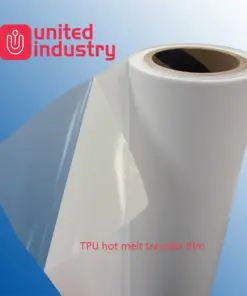
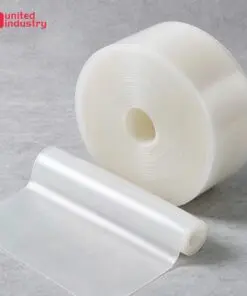
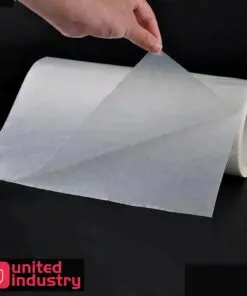
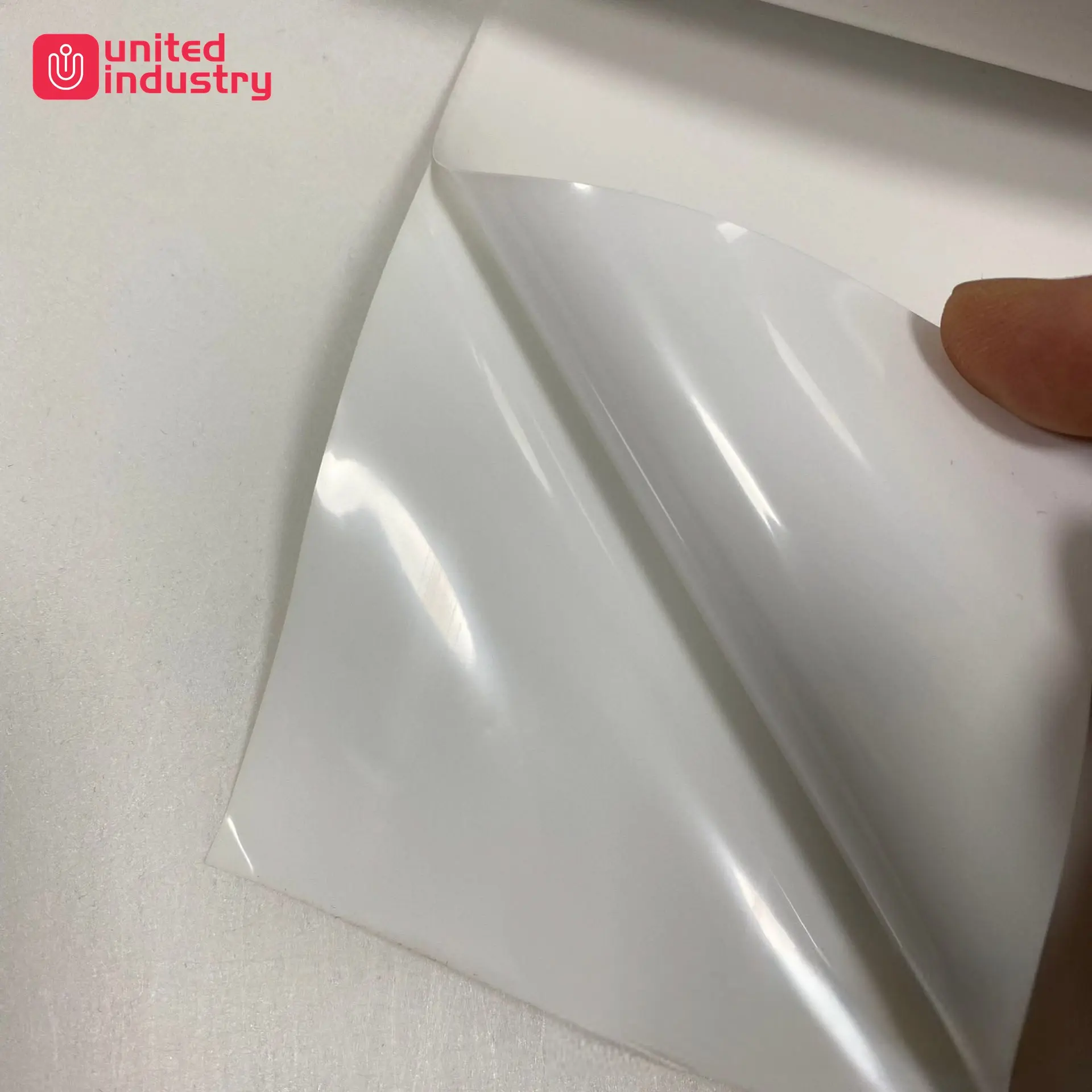
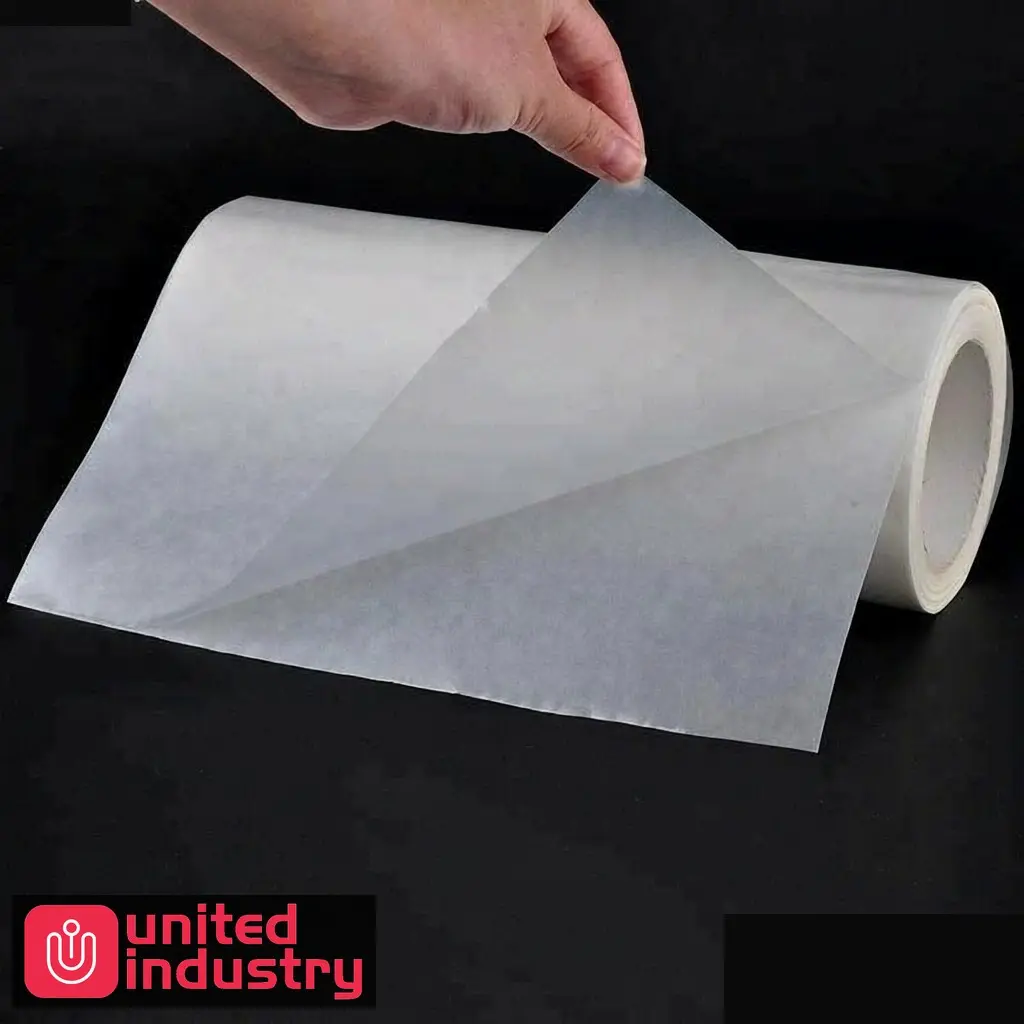
UF-251W is a white opaque PES hot melt adhesive film. It is a thermoplastic copolyester, cast from copolyester resin and supplied on a release liner. The film stays dry and tack-free at room temperature. Because it melts at 105-125 °C, it forms a soft, thin bond that sets hard on cooling. Its solid white body also does a second job while it bonds. The film blocks dye migration out of the fabric underneath. That anti-sublimation barrier is why UF-251W exists.
Why dye blocking matters
Sublimation-printed polyester holds dye that is not fully fixed. Under press heat that dye re-activates. A clear or translucent film then lets the dye bleed straight into whatever you laminate on top. As a result, white overlays turn pink or grey within days. UF-251W solves this with a dye-blocking agent and a fully opaque white body. Because the film bonds and screens at the same time, the laminate stays clean white, wash after wash.
UF-2510, by contrast, is the all-round PES film. Specify UF-251W whenever a light-coloured overlay meets printed or deeply dyed polyester.
Key Features
- White opaque film with anti-sublimation protection — a dye-blocking formulation and full opacity stop sublimation dyes from migrating into white or light-coloured overlays during pressing and service
- Wash and dry-clean resistance — no delamination and no blistering after 50 domestic wash cycles at 40 °C, and the bond holds through dry cleaning as well
- Excellent adhesion to polyester and blends — copolyester chemistry is compatible with PET fibres, so bonding is strong without surface treatment
- Highest heat resistance in our film range — melting point 105-125 °C keeps laminates stable in curtains, wall coverings and automotive interiors
- Free-flowing at pressing temperature — melt flow rate of 25-35 g/10 min (160 °C) lets the film penetrate fabric structures for mechanical anchorage
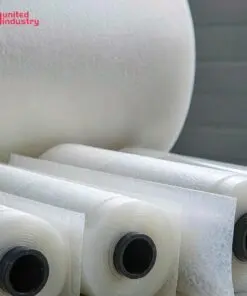
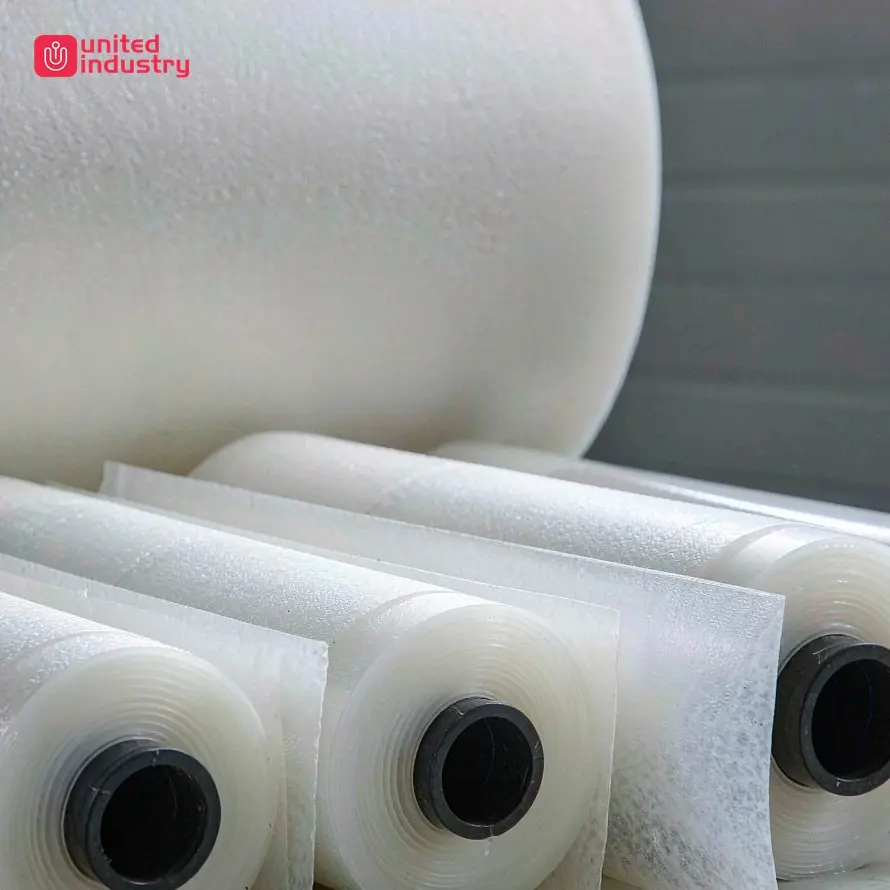
- Made to your dimensions — thickness 0.05-0.30 mm, width slitted from 20 to 1520 mm, rolls of 100 m or 200 m
Technical Specifications
| Property | Value |
|---|---|
| Main component | Copolyester (PES) |
| Appearance | White opaque film |
| Anti-sublimation | Dye migration barrier for sublimation-printed and deeply dyed polyester |
| Thickness | 0.05-0.30 mm (standard 0.05 / 0.08 / 0.10 / 0.12 / 0.15 mm, customizable) |
| Width | 20-1520 mm, slitting on request |
| Roll length | 100 m / 200 m, customizable |
| Density | 1.25-1.30 g/cm³ (23 °C) |
| Melting temperature | 105-125 °C (DSC) |
| Melt flow rate | 25-35 g/10 min (160 °C, 2.16 kg) |
| Wash resistance | No delamination, no blistering (40 °C, 50 home laundering cycles) |
| Packaging | PE-sealed rolls in cartons or on pallets |
Recommended Pressing Conditions
| Parameter | Value |
|---|---|
| Pressing temperature | 120-150 °C (adjust to fabric and film thickness; film must fully melt and penetrate) |
| Pressure | 0.2-0.4 MPa (flat press or continuous laminator) |
| Pressing time | 10-20 s (adjust to fabric thickness and thermal conductivity) |
| Cooling | Natural cooling to room temperature; avoid moving the laminate before it sets |
Cut the film to size, heat-press according to the conditions above, and allow it to cool and set. Always run a small trial to establish the optimum temperature, pressure and time before volume production.
Applications
Use UF-251W wherever dye migration is the risk and white must stay white. The usual laminates are:
- Sublimation-printed sportswear and fashion — laminating white logos, panels and reinforcements over printed polyester without the dye bleed that stains clear-film bonds
- Footwear — white overlays and heat-cut parts bonded to sublimation-printed mesh uppers, keeping edges and logos clean
- Home textiles — white and light-coloured wall coverings, curtains and furnishing fabrics laminated over deeply dyed base cloth
- Apparel — interlinings and facings on intensely coloured or printed fabrics, where back-staining would show through light outer layers
- Bags, luggage and automotive interiors — trim and fabric-to-substrate bonding that sees heat in service, with printed substrates underneath
Because the film activates only above 105 °C and sets hard on cooling, it suits both processes. It runs equally well on a flat bed press and on a continuous laminating line.
UF-251W or UF-2510? How to choose
Both films come from the same PES family. On a spec sheet they look almost identical, because they share the same melting range, melt flow rate, pressing window and wash performance. However, the difference is not in how they bond. It is in what they let through.
| Property | UF-251W | UF-2510 |
|---|---|---|
| Appearance | White, fully opaque | Milky translucent |
| Sublimation dye | Blocked — dye-blocking formulation in an opaque white body | Not blocked — dye can migrate into the laminate above |
Everything else is the same on both grades. Both use a copolyester base and melt at 105-125 °C. The pressing window is 120-150 °C at 0.2-0.4 MPa for 10-20 s, with a melt flow rate of 25-35 g/10 min. Thickness runs 0.05-0.30 mm and width 20-1520 mm, in rolls of 100 m or 200 m. Neither grade delaminates or blisters after 50 wash cycles at 40 °C.
Specify UF-251W when the face layer is white or light-coloured. It also fits when the fabric underneath is sublimation-printed or dyed to a deep shade, and the film stays hidden inside the laminate. That is the combination where a clear film fails visibly. The overlay turns pink or grey within days of pressing, and no amount of washing brings it back.
Specify UF-2510 when there is no dye to block, or when the film itself could be seen. A white opaque layer can read as a pale shadow through sheer, lightweight or very light face fabrics. On dark face fabrics, a white glue line can show at cut edges. In those builds the translucent film disappears into the laminate, which is exactly what you want.
Rule of thumb: if the risk is colour moving, take UF-251W. If the risk is the film being seen, take UF-2510.
Because both grades share the same melting range, pressing window and wash performance, qualifying one qualifies the other. You can therefore run UF-251W on printed styles and UF-2510 on plain ones on the same line, without changing temperature, pressure or dwell time. Full specification and pressing data for the standard grade: PES Hot Melt Film UF-2510.
Frequently Asked Questions
What does the anti-sublimation function actually do?
Sublimation-printed polyester carries dye that is not fully fixed. At pressing temperatures that dye re-activates, then migrates into anything in contact with the fabric. A conventional clear film bonds well but transmits the dye. As a result, white overlays turn pink, blue or grey within days. Because UF-251W combines an opaque white body with a dye-blocking formulation, it bonds the overlay and screens the dye in one step.
Do I still need UF-2510 if I have UF-251W?
For white or light overlays on printed or deeply dyed polyester, specify UF-251W. However, on unprinted fabrics, UF-2510 remains the standard all-round PES film. The same applies where the film sits between two coloured layers and opacity does not matter. Both share the same melting range, pressing conditions and wash resistance, so switching between them does not change your process.
How is PES film different from TPU film?
PES is a copolyester and TPU is a polyurethane elastomer. PES melts higher, at 105-125 °C against roughly 95 °C for our TPU film. Moreover, it resists dry cleaning and bonds polyester fabrics more aggressively. TPU is the softer, more elastic option with a lower pressing temperature. Choose PES when the laminate must survive commercial cleaning and heat. Choose TPU when stretch and softness matter most.
Will the bond survive dry cleaning?
Yes. UF-251W resists both home laundering and dry cleaning. It shows no delamination or blistering after 50 domestic wash cycles at 40 °C. The dye barrier is equally durable, because it is part of the film rather than a coating that washes out.
Can I get the film in custom thickness and width?
Yes. Standard thicknesses run from 0.05 to 0.30 mm. Rolls are slitted from 20 to 1520 mm on request, in lengths of 100 m or 200 m. Tell us the fabric pair and the press you use, and we will recommend a starting specification with samples to confirm.