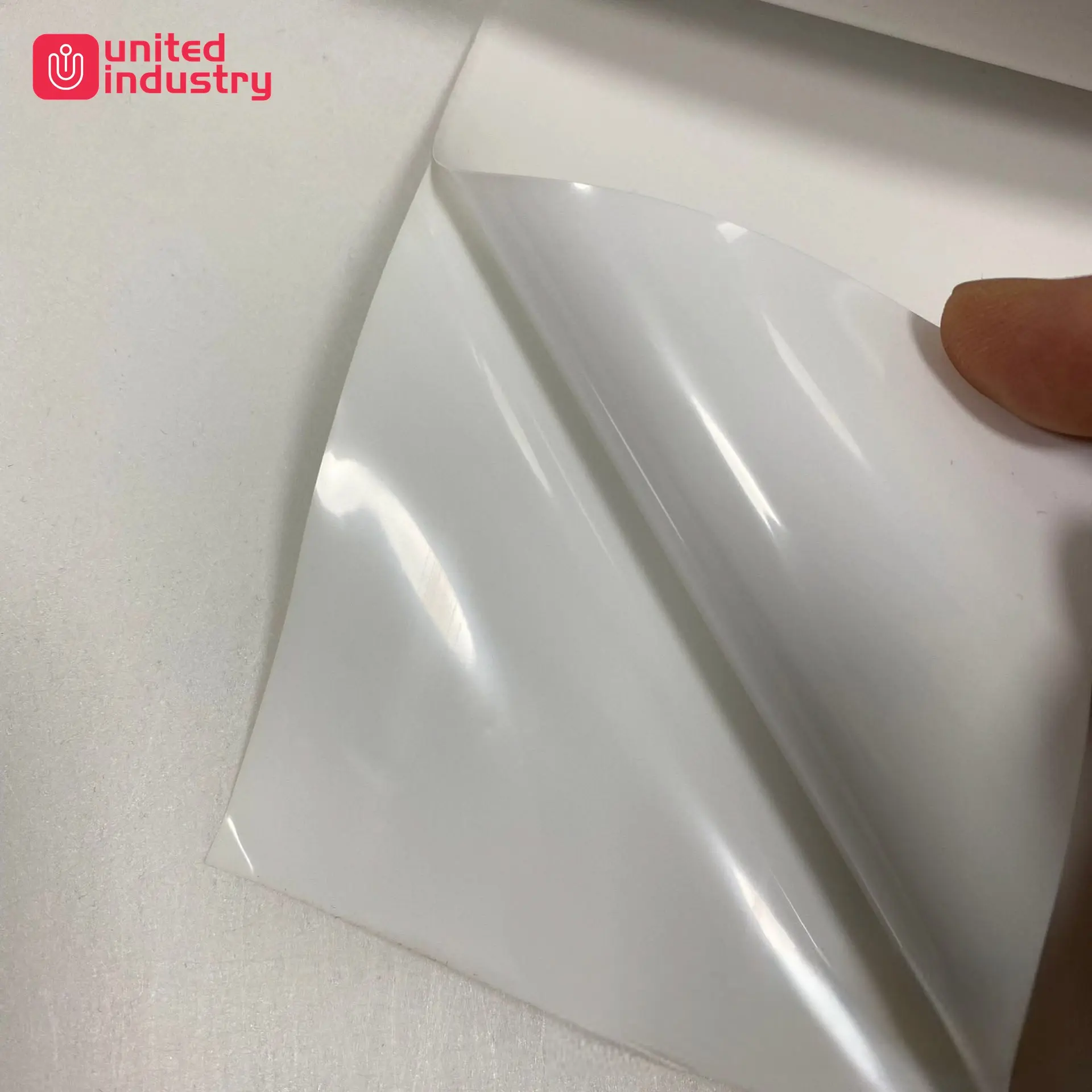

PES Hot Melt Film UF-2510
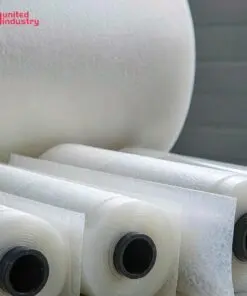
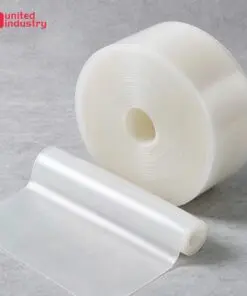
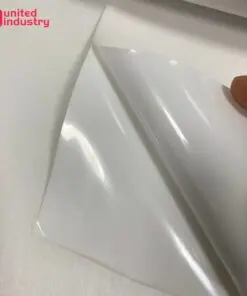
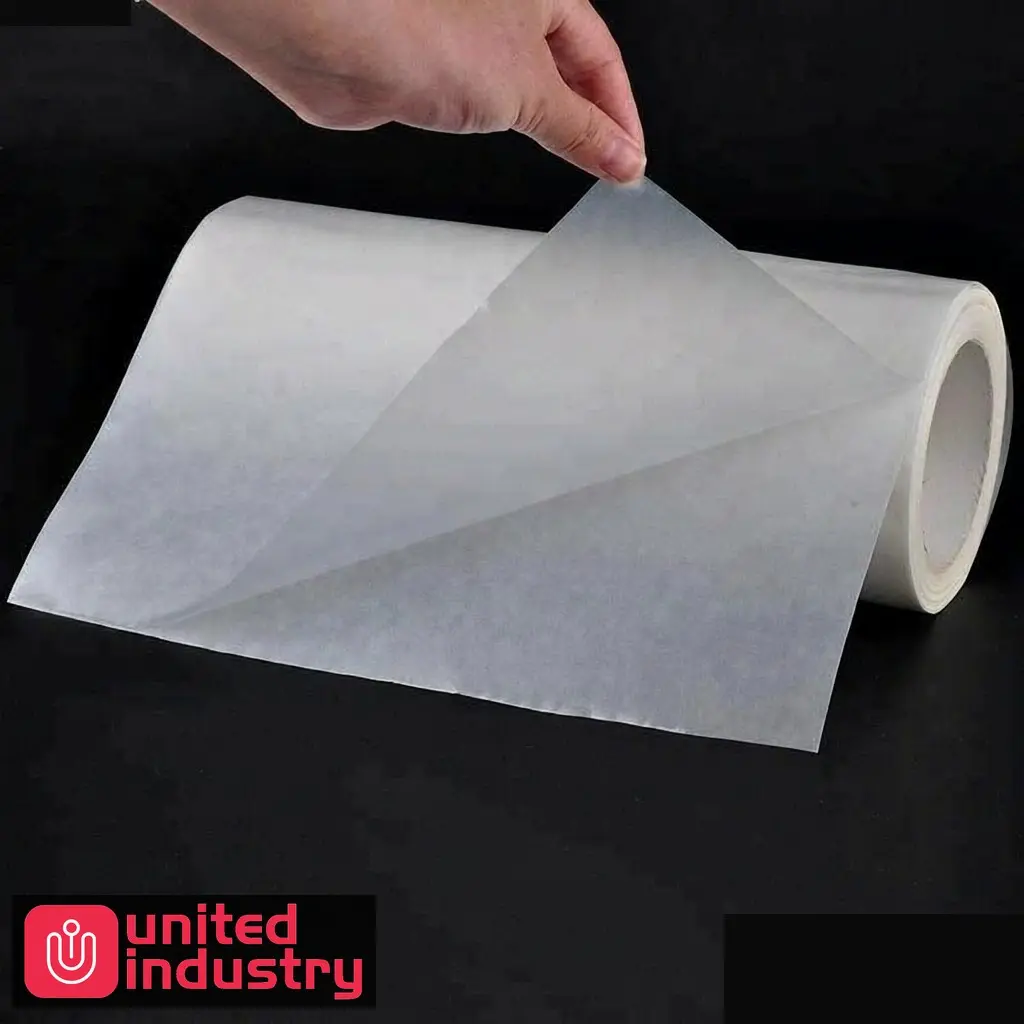
UF-2510 is a thermoplastic copolyester (PES) hot melt adhesive film. It is supplied on a release liner and cast from copolyester resin. The film is dry and tack-free at room temperature. Because it melts at 105-125 °C, it forms a soft, thin bond that sets hard on cooling. Where TPU film is chosen for stretch and softness, PES film is chosen for durability.
Where PES film fits
The bond resists home laundering and dry cleaning. It also withstands higher service temperatures than our TPU grades, and it grips polyester-rich fabrics exceptionally well. That combination makes UF-2510 the standard choice for garment lamination, home textiles, footwear and automotive interiors. In all of those, a laminate has to survive repeated cleaning and years of service without lifting at the edges.
Bonding over sublimation-printed or deeply dyed polyester? A translucent film lets that dye bleed into the overlay. For that build we therefore recommend UF-251W, the white anti-sublimation grade. It runs on the same press settings.
Key Features
- Wash and dry-clean resistance — no delamination and no blistering after 50 domestic wash cycles at 40 °C, and the bond holds through dry cleaning as well
- Highest heat resistance in our film range — melting point 105-125 °C keeps laminates stable in curtains, wall coverings and automotive interiors
- Excellent adhesion to polyester and blends — copolyester chemistry is compatible with PET fibres, so bonding is strong without surface treatment
- Free-flowing at pressing temperature — melt flow rate of 25-35 g/10 min (160 °C) lets the film penetrate fabric structures for mechanical anchorage
- Soft, thin glue line — a low-add-on bond that preserves drape and hand feel instead of stiffening the fabric
- Made to your dimensions — thickness 0.05-0.30 mm, width slitted from 20 to 1520 mm, rolls of 100 m or 200 m
Technical Specifications
| Property | Value |
|---|---|
| Main component | Copolyester (PES) |
| Appearance | Milky translucent |
| Thickness | 0.05-0.30 mm (standard 0.05 / 0.08 / 0.10 / 0.12 / 0.15 mm, customizable) |
| Width | 20-1520 mm, slitting on request |
| Roll length | 100 m / 200 m, customizable |
| Density | 1.25-1.30 g/cm³ (23 °C) |
| Melting temperature | 105-125 °C (DSC) |
| Melt flow rate | 25-35 g/10 min (160 °C, 2.16 kg) |
| Wash resistance | No delamination, no blistering (40 °C, 50 home laundering cycles) |
| Packaging | PE-sealed rolls in cartons or on pallets |
Recommended Pressing Conditions
| Parameter | Value |
|---|---|
| Pressing temperature | 120-150 °C (adjust to fabric and film thickness; film must fully melt and penetrate) |
| Pressure | 0.2-0.4 MPa (flat press or continuous laminator) |
| Pressing time | 10-20 s (adjust to fabric thickness and thermal conductivity) |
| Cooling | Natural cooling to room temperature; avoid moving the laminate before it sets |
Cut the film to size and heat-press according to the conditions above. Then allow it to cool and set. Always run a small trial to establish the optimum temperature, pressure and time before volume production.
Applications
UF-2510 bonds any flexible combination that must stay soft, thin and cleanable. Typical uses include:
- Apparel — laminating knitted fabrics, polyester and fleece; bonding interlinings and facings; heat transfer printing of graphics onto sportswear and fashion garments
- Home textiles — wall coverings, curtains and furnishing fabrics, where the laminate must hold through washing and keep its shape in service
- Footwear — mesh uppers bonded to lining fabrics
- Bags, luggage and automotive interiors — trim and fabric-to-substrate bonding that sees heat and repeated cleaning
- Filter media and reflective materials — double-layer and multi-layer lamination of technical textiles
Because the film activates only above 105 °C and sets hard on cooling, it suits both processes. It is equally at home on a flat bed press and on a continuous laminating line.
Frequently Asked Questions
How is PES film different from TPU film?
PES is a copolyester and TPU is a polyurethane elastomer. PES melts higher, at 105-125 °C against roughly 95 °C for our TPU film. It also resists dry cleaning and bonds polyester fabrics more aggressively. TPU is the softer, more elastic option with a lower pressing temperature. Choose PES when the laminate must survive commercial cleaning and heat. Choose TPU when stretch and softness matter most.
Will the bond survive dry cleaning?
Yes. UF-2510 resists both home laundering and dry cleaning. It shows no delamination or blistering after 50 domestic wash cycles at 40 °C. If your care label specifies dry clean only, run a trial on your actual fabric before production. Results depend on the solvent and on the substrate.
Which fabrics does it bond best?
Polyester, polyester blends, knitted fabrics and fleece are where PES performs best, because copolyester chemistry is compatible with PET fibres. It also bonds cotton, wool blends, nonwovens, foams and technical textiles. Test very heat-sensitive fabrics first, because the film needs 120-150 °C to activate.
Can I order custom thickness, width and roll length?
Yes. Standard thicknesses are 0.05, 0.08, 0.10, 0.12 and 0.15 mm within a 0.05-0.30 mm range. Widths are slitted on request from 20 to 1520 mm, and roll length is 100 or 200 m. Send your target dimensions and annual volume for a quotation.
How should the film be stored, and how long does it keep?
Storage and ordering
Keep the rolls sealed in their PE bags in a cool, dry, dark place, below 30 °C and 60% RH. Shelf life is 12 months in the original unopened packaging. The film is hygroscopic, so reseal it promptly after opening and use it soon.
What is the minimum order quantity, and can I get a sample?
There is no fixed MOQ. We discuss quantities according to your needs, and trial orders are welcome. Samples are available for evaluation, so email us with your fabric, target thickness and application and we will send the right grade. Test reports such as SGS can be provided on request; tell us which standard or test items you need.